Glyco Harmony Official Website › Blog › Glyco Harmony research
Glyco Harmony Research: Has the Product Itself Ever Been Studied?
Glyco Harmony research is easy to find as a phrase and hard to find as a fact. Searches lead to pages that quote studies on gymnema, chromium or green tea and then imply the bottle was tested. This guide separates the two. It lists what is published, what is not, and seven questions you can ask of any study shown next to a supplement.
Quick answer: Glyco Harmony research does not include a clinical trial of the finished product in the material we hold. The studies that exist cover single ingredients, often at doses far above the 7.6 mg blend in the bottle. Chromium at 200 mcg is the one named amount. Read every citation for dose, form and who was studied.
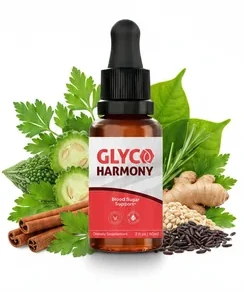
- No trial of the finished product is named in the seller's factsheet or on this website.
- Studies cited on this site concern single ingredients, not the bottle.
- The seller's own doses for comparison: African mango trial 300 mg a day, Coleus forskohlii trial 500 mg a day.
- Gymnema trials use hundreds of mg. Beta-alanine research is measured in grams.
- The whole blend is 7.6 mg for 18 ingredients, and individual amounts are not published.
- Chromium at 200 mcg is a conventional supplemental dose and the only named amount.
General information, not medical advice. Glyco Harmony is a dietary supplement. It is not FDA approved, and no supplement is. It is not meant to diagnose, treat, cure or prevent any disease. If you have a medical condition or take medicine, ask your doctor or pharmacist before you use it.
Does Glyco Harmony research exist for the finished product?
The short answer is no, not in anything we hold. The seller's factsheet names no study of the finished bottle. This website does not publish one, and its footer says the product has not been the subject of a clinical trial of its own. The references on the site concern individual ingredients.
That is a normal situation for a supplement, and it applies to glyco harmony research as much as to any other product. It is also an important one. A trial of gymnema extract tells you about that extract at that dose in those people. It does not tell you what a 1 ml serving of a mixed liquid does.
If you see a page that talks about glyco harmony research and shows a chart, a lab photo or a "study", ask where it comes from. Ask who ran it, who paid for it and whether the product tested was this one. If those answers are missing, treat the claim as unverified. The blood sugar guide shows what the stronger evidence points to instead.
What research exists on the ingredients?
The seller's factsheet gives a short list of dose figures from the human trials behind the blend botanicals. They are useful because they show the distance between a trial dose and a bottle dose.
| Ingredient | What the seller says about its trials | In this bottle |
|---|---|---|
| African mango seed extract | One trial used 300 mg a day | Amount not published |
| Coleus forskohlii root extract | One trial used 500 mg a day | Amount not published |
| Gymnema leaf extract | Trials use hundreds of mg | Amount not published |
| Beta-alanine | Research is measured in grams | Amount not published |
| Chromium (as chromium picolinate) | 200 mcg is a conventional supplemental dose | 200 mcg, the one named amount |
Now compare the trial figures with the blend. The entire blend weighs 7.6 mg and holds 18 ingredients. Even if one ingredient took all of it, 7.6 mg is far below 300 mg. That is plain arithmetic. It is why the seller itself says the blend is small and that the trials used far larger doses.
This is not a reason to panic and not a reason to relax. It is a reason to be precise: the research on these plants exists, but it cannot be copied onto this bottle.
How should you read a citation about Glyco Harmony research?
Use these seven questions on any study shown next to the product. Write the answers down if you like.
- What was tested? An ingredient, a blend or this exact product? Only the last counts as research on the bottle.
- What dose? Compare it with what the label gives. Here the label gives 7.6 mg for the whole blend.
- What form? An extract, a powder and a tea are not the same thing, and neither is a drop in glycerin.
- Who took part? Age, health and medicines matter. A study on people with a diagnosed condition does not describe a healthy adult, and the reverse is also true.
- How long did it run? Short trials say little about months of use.
- What was measured? A lab marker is not the same as a result you feel.
- Who paid and who wrote it up? A seller's own page is not independent.
Those seven questions apply to any supplement, not only this one. They also explain why the seller's testing page keeps its claims narrow.
Where does chromium fit in the research picture?
Chromium is the strongest part of the story, but only in a limited way. The label names 200 mcg of chromium as chromium picolinate, and the seller calls that a conventional supplemental dose. It is the only ingredient with a defensible amount behind it.
What it cannot do is turn the bottle into a treatment. The seller says in plain words that the product does not treat diabetes or any other condition and does not replace medicine. If you want the detail, our chromium article goes through what 200 mcg can and cannot do.
What does the certificate of analysis prove?
Some readers confuse a lab certificate with research. The recorded certificate is GH-COA-3304-26Q3, from Empire Chromium Analytics in New York. Its scope is chromium identity and a microbial screen. It does not quantify the blend ingredients, because those amounts are not disclosed.
So the certificate answers a quality question: is the chromium what it should be, and is the batch clean on the screened items? It does not answer an effect question. Nothing on it shows that the product changes anything in your body.
What do the buyer reviews add?
They add stories, not studies. The seller's order records show an average of 4.5 out of 5 from 1,210 written reviews across 9,050 orders, and 85% would recommend. The most common wait before noticing anything is 3 to 4 weeks, and several reviewers call the change mild.
Reviews are useful for taste, routine and customer service. They are weak for effect, because people differ, take other steps at the same time and know what they bought. None of the eight named reviews reports a changed glucose reading. The seller says it will not publish a testimonial that does.
What would good Glyco Harmony research look like?
It would name the product and the lot. It would give the dose per serving, the length of use and the people studied. It would measure something that matters and report the results that did not go the way the seller hoped. It would be run or checked by someone with no stake in sales.
Until that exists, the honest position on glyco harmony research is the one the seller states: the research is on ingredients, the doses differ and the finished product has not been tested on its own. Weigh that against the 60-day guarantee, which lets you form your own view at low risk.
How can you keep your own record next to the research?
Because the finished product has no trial of its own, your own notes become the only data that is really about you. Write down the date you start, the pack, the time of day you take it and the other things you do that month, such as walking, meals and sleep. Add a short line each week.
After 30 days, which is also the minimum use the guarantee asks for, read the notes back. Did anything change that you can tell apart from everything else you changed? If you cannot tell, that is a result too, and the 60-day window gives you time to act on it. Share the notes with your doctor if you take medicine.
Frequently asked questions
Has Glyco Harmony been clinically tested?
No trial of the finished product is published in the material we hold, and this website says so. The references cited concern single ingredients.
What research is there on the ingredients?
The seller names a 300 mg a day African mango trial and a 500 mg a day Coleus forskohlii trial, says gymnema trials use hundreds of mg, and says beta-alanine research is measured in grams.
Are the trial doses the same as the doses in the bottle?
No. The whole blend is 7.6 mg, and the individual amounts inside it are not published.
Does the certificate of analysis count as research?
No. It covers chromium identity and a microbial screen for one lot. It does not measure effects or the blend ingredients.
Do reviews prove the product works?
No. They describe individual experiences, and the seller's own reviews call the change mild and slow. Results vary by person.
Where can I read about the ingredients myself?
The ingredients page on this website lists each one with its research and the dose used. Your pharmacist can help you judge it against your medicines.
Our view
We think the seller is fair to say what it has not got. No trial of the product, no individual amounts and a blend that is small next to the doses in the studies are all stated on the site.
That leaves you with a judgement call, not a proof. If you value a routine, like the format and want to try chromium at a conventional dose, the guarantee gives you room to test. If you want evidence of a strong effect, this page cannot give it to you, and neither can anyone else yet.
Use the seven questions on every study you see. If you take medicine or have a medical condition, speak to your doctor before you start.
Last updated