Glyco Harmony Official Website › Blog › Chromium and Blood Sugar
Chromium and Blood Sugar: What 200 mcg Can and Cannot Do
Chromium is the only ingredient in Glyco Harmony with a published amount on the label, and the only one with a body of glycemic trial data behind it. Here is what that data actually found — modest, mixed, and mostly in people who were already struggling.
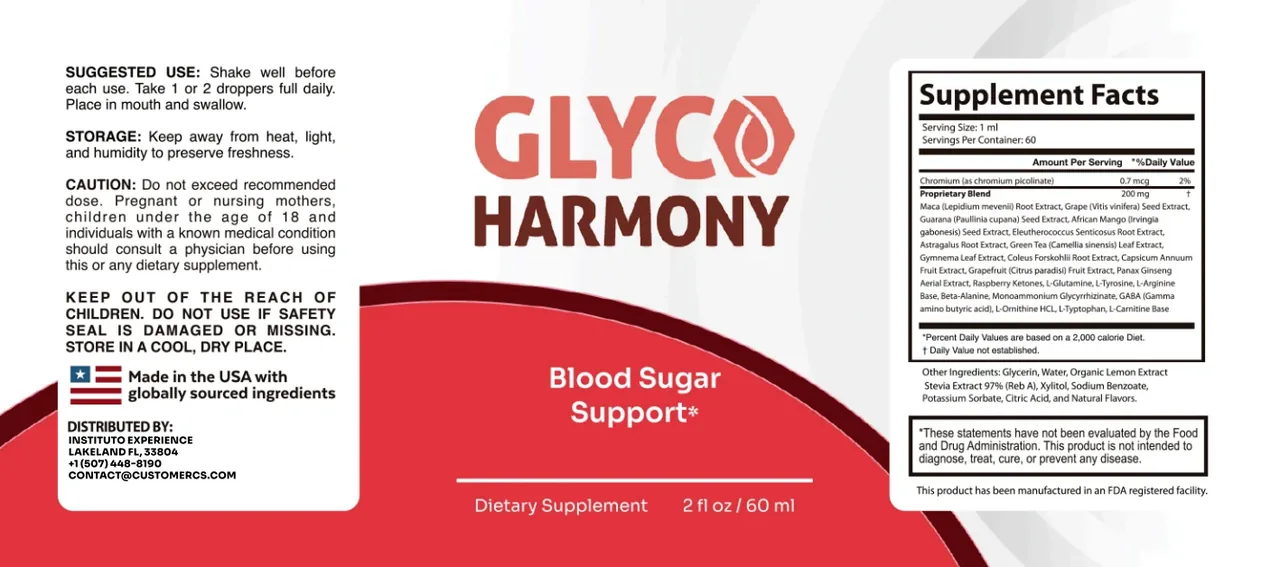
- 200 mcg is a real, disclosed dose — not a dusting, and within the range the trials used.
- Meta-analysis finds a modest effect on glycemic markers, largely in people with type 2 diabetes rather than healthy adults.
- Deficiency is rare in the ordinary American diet, which limits how much a supplement can add.
- It is not a substitute for medication, monitoring or a clinician. Nothing on this page changes that.
This is general information, not medical advice. Glyco Harmony is a dietary supplement. It is not a treatment for diabetes or prediabetes, it is not a substitute for prescribed medication, and nothing on this page should be used to change a prescription. If you are managing blood sugar, the person to talk to is the clinician who has your results.
What chromium does in the body
Chromium is an essential trace mineral. The NIH Office of Dietary Supplements describes its role in carbohydrate and lipid metabolism, where it is understood to act on insulin signalling rather than on glucose directly.
The adequate intake for adults is measured in micrograms, and severe deficiency is genuinely rare in people eating an ordinary varied diet. That matters more than it sounds: like any nutrient, chromium's clearest benefit is correcting a shortfall, and most Americans do not have one.
What the trials found
A 2015 meta-analysis pooled trials of chromium supplementation and reported effects on glycated hemoglobin and fasting glucose that were statistically detectable but modest in size, with meaningful variation between studies. A randomized clinical study of chromium picolinate reported beneficial effects on glycemic control in its participants.
Two honest qualifications belong with those sentences. The effects are small — useful as a nudge, not as a treatment. And most of the participants had type 2 diabetes, which is not the same population as a healthy adult buying a supplement online.
Why results disagree between studies
- Baseline status. Someone low in chromium has room to improve; someone replete does not.
- The form used. Picolinate is absorbed better than some other salts, and trials do not all use it.
- Trial length. Glycemic markers such as HbA1c reflect months, so short studies can miss a real change.
- What else participants were taking. Chromium added on top of medication is a different question from chromium alone.
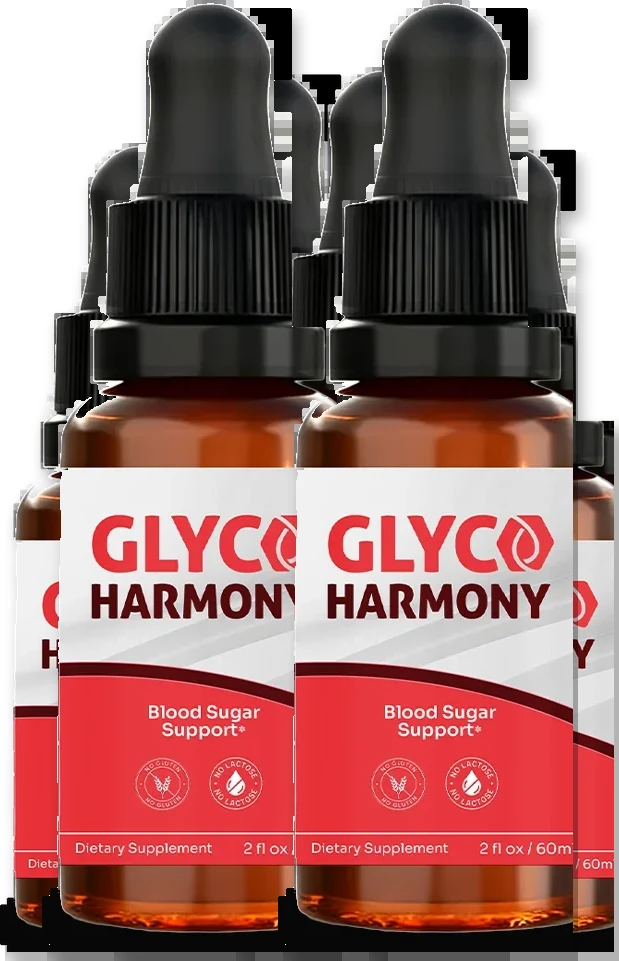
One disclosed dose, printed honestly.
We tell you what is measured and what is not, on every page. If that is how you would rather buy, the six-bottle pack is our lowest price per bottle.
$294 — six bottles at $49 each
Order On The Official WebsiteFree US shipping · six digital bonuses · 60-day money-back guarantee
Who is most likely to see anything
| Situation | Likely from chromium | Better first step |
|---|---|---|
| Healthy adult, varied diet | Little to nothing | Nothing needed |
| Diet low in whole grains, meat and vegetables | Possible, if intake is genuinely low | Fix the diet first — it is free |
| Prediabetes on a clinician's radar | Modest at best | A structured lifestyle program |
| Type 2 diabetes, medicated | Where most trial data sits | Talk to your clinician before adding anything |
Why the form on the label matters
“Chromium” on a panel is not one thing. The compound it is bound to changes how much of it you absorb, and absorption is poor for all of them — a small percentage of what you swallow.
| Form | Where it turns up | Worth knowing |
|---|---|---|
| Chromium picolinate | Most supplements, including this one | The form most of the glycemic trials used |
| Chromium chloride | Older and cheaper formulas | Absorbed less readily |
| Chromium nicotinate | Some blends | Bound to niacin; less trial data |
| Food chromium | Broccoli, whole grains, meat, brewer’s yeast | Where most people get theirs, without thinking about it |
Glyco Harmony declares chromium picolinate, which is the form behind the randomized clinical study and much of the wider literature. That is a point in the label’s favour and we will take it — a panel that names the form is telling you something a panel that just says “chromium” is not.
Absorption is low either way
Only a small fraction of ingested chromium is absorbed, which is one reason supplemental doses are measured in micrograms against a body that holds very little. It is also why “more” is not a useful strategy: past a point you are simply passing it through.
Safety and upper limits
The ODS factsheet sets out what is known about tolerability and notes that no upper intake level has been established for chromium from food and supplements — not because any amount is safe, but because the data to set one are thin. In practice:
- Add up every source. Multivitamins frequently contain chromium too.
- If you take insulin or an oral glucose-lowering medicine, adding anything that may affect blood sugar is a conversation for your clinician, not a decision to make alone.
- If you have kidney or liver disease, ask first.
- Stop and seek advice if you notice unusual symptoms after starting.
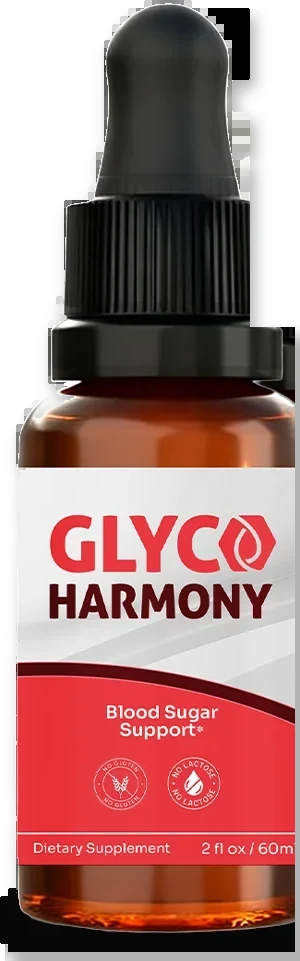
One thing a liquid genuinely changes
Glyco Harmony is drops rather than a capsule, and it is worth separating the part of that which matters from the part which is marketing.
What it does not change: how much active material fits. A 1 ml serving holds what it holds, and in this case that is 200 mcg of chromium plus a 7.6 mg blend. Liquid is not a way around the arithmetic.
What it does change:
- Swallowing. A real advantage if capsules are difficult, which is common enough in older adults to matter.
- Dose flexibility. A dropper can deliver half a serving; a capsule cannot be split meaningfully. Follow the label, but the option exists.
- Onset of absorption. Slightly earlier, because there is no shell to dissolve. For these ingredients that is a detail rather than a difference.
- Storage. Liquids are less forgiving. Keep the bottle closed, cool and out of sunlight, and use it within the period on the label.
- Taste. Unavoidable in a way a capsule is not — hence the lemon, stevia and xylitol in the base.
The honest summary: a liquid is easier to take and no stronger for it. If you were choosing between this and a capsule containing the same amounts, choose whichever you will still be taking in week six. The daily routine is on the how to use page.
What this means for Glyco Harmony
Chromium is the strongest item on this label and we would rather say so plainly than spread the credit across thirteen names. The remaining twelve ingredients share a 7.6 mg blend — a total smaller than a single studied dose of most of them, as set out on the ingredients page.
So: read this product as 200 mcg of chromium with a botanical blend attached, judge it on that, and use the 60-day guarantee if it does nothing for you. Questions go to +1 (925) 231-0148 or [email protected].
The ODS consumer guide to dietary supplements is the best neutral starting point if you want to sanity-check anything on this page.
Questions people ask about chromium
Will it lower my blood sugar on its own?
Not in the way a medication does, and it is not intended to. The pooled effects in the meta-analysis were statistically detectable and modest, mostly in people with type 2 diabetes. If you need your blood sugar lowered, that is a clinical question with clinical answers, and this is not one of them.
Can I take it alongside metformin or insulin?
That is a question for the person who prescribed them, and the answer may well be yes — but it has to be their yes, not ours. Anything that may nudge glucose in the same direction as a medication designed to move it deserves a conversation before, not after.
Does it help with weight or cravings?
You will see that claim attached to chromium often. The evidence for it is weaker than the glycemic evidence, which is already modest, and we are not going to make it. The ODS consumer guide is a reasonable place to sanity-check any version of it you come across.
How long before I would know?
Glycemic markers move slowly. HbA1c reflects roughly the previous three months, so a two-week trial tells you almost nothing. If you are going to test this properly, test it against a number your clinician took before you started — and give it a season, not a fortnight.
Is 200 mcg a lot?
It is a conventional supplemental amount and sits within the range the trials worked in. The more useful comparison is not against a maximum but against your diet: if you eat broccoli, whole grains and meat with any regularity, you are already getting chromium, and this is an addition rather than a rescue.
References
- National Institutes of Health, Office of Dietary Supplements. Chromium: fact sheet for health professionals. https://ods.od.nih.gov/factsheets/Chromium-HealthProfessional/
- Suksomboon N, Poolsup N, Yuwanakorn A. Effect of chromium supplementation on glycated haemoglobin and fasting plasma glucose in patients with diabetes mellitus. 2015. https://www.ncbi.nlm.nih.gov/pmc/articles/PMC4430034/
- Paiva AN, et al. Beneficial effects of oral chromium picolinate supplementation on glycemic control in patients with type 2 diabetes: a randomized clinical study. Journal of Trace Elements in Medicine and Biology. 2015. https://pubmed.ncbi.nlm.nih.gov/26302914/
- National Institutes of Health, Office of Dietary Supplements. Dietary supplements: what you need to know. https://ods.od.nih.gov/factsheets/WYNTK-Consumer/

Every page, every journal post, the bottle facts and the ingredients go through review by Dr. Shira Eytan, MD, FACE before they ship. We write these pages from the Glyco Harmony label and the manufacturer’s own lot paperwork, cite public nutrient references for every named ingredient, and print “not published” wherever a figure is not disclosed rather than estimating it — which, on a 7.6 mg proprietary blend, is most of the panel. Corrections are made on the page itself and the review date moves forward — write to [email protected]. Last reviewed September 2026 by Dr. Shira Eytan, MD, FACE.
One number you can check.
That is more than most labels in this category offer. Sixty days is long enough to find out whether it changes anything for you.
$294 — six bottles at $49 each
Order Glyco Harmony On The Official WebsiteFree US shipping · six digital bonuses · 60-day money-back guarantee · lot GH.26.Q3.NY.3304