Glyco Harmony Official Website › Blog › Gymnema Sylvestre
Gymnema Sylvestre: What the “Sugar Destroyer” Actually Does
Gymnema has the most interesting evidence of any botanical on this panel — and the widest gap between what its trials used and what a 7.6 mg blend can hold. Both halves of that sentence are on this page.

- The name comes from a real effect: chewing the leaf temporarily blunts the taste of sweetness.
- A 2021 meta-analysis found gymnema supplementation improved glycemic control in people with type 2 diabetes.
- Trial doses run to hundreds of milligrams of standardized extract a day.
- Glyco Harmony's entire blend is 7.6 mg, shared across twelve botanicals. We print that comparison rather than hide behind the ingredient name.
This is general information, not medical advice. Glyco Harmony is a dietary supplement. It is not a treatment for diabetes or prediabetes, it is not a substitute for prescribed medication, and nothing on this page should be used to change a prescription. If you are managing blood sugar, the person to talk to is the clinician who has your results.
Where the name comes from
Gymnema sylvestre is a climbing shrub used in Ayurvedic practice, where its Hindi name translates roughly as “sugar destroyer.” The name is not marketing invention: the gymnemic acids in the leaf bind to sweet taste receptors on the tongue, and for a while afterwards sweet things taste noticeably flat.
That effect is real, immediate and unrelated to blood sugar. It also only happens if the leaf material touches your tongue — which is worth knowing before you attribute anything to it in a swallowed supplement.
The traditional use behind the name goes further back than the marketing does. Gymnema appears in Ayurvedic texts under the Sanskrit name gurmar, which carries the same meaning, and the leaf has been chewed for centuries. Long use is a reasonable prompt to study a plant properly — it is how a great deal of pharmacology started — but it is a starting point rather than a finding, and the trials are what turn it into one.
What the research found
A 2021 systematic review and meta-analysis examined gymnema supplementation and glycemic control in people with type 2 diabetes and reported improvement. A 2019 phytochemical review covers the compounds involved and the broader pharmacological literature.
As with chromium, two qualifications belong alongside. The participants were people with diagnosed type 2 diabetes, not healthy adults. And the supplements used were standardized extracts at doses far above anything a multi-ingredient blend delivers.
The dose gap, stated plainly
| In the trials | In Glyco Harmony | |
|---|---|---|
| Ingredient | Gymnema alone | Gymnema plus eleven others |
| Amount | Hundreds of mg daily | Inside a 7.6 mg blend total |
| Participants | People with type 2 diabetes | General adult buyers |
| Duration | Weeks to months | Your choice |
The arithmetic is not close, and pretending otherwise would be dishonest. A 7.6 mg blend cannot contain a several-hundred-milligram dose of anything, so no botanical in this product is present at the amount its own research used. That is written into every entry on the ingredients page, next to the dose the studies actually used.
Why a blend at all? 21 CFR 101.36 permits a proprietary blend to declare a combined total without per-ingredient amounts, and the great majority of this category uses it. Legal and common are not the same as informative — which is why the number is on the page.
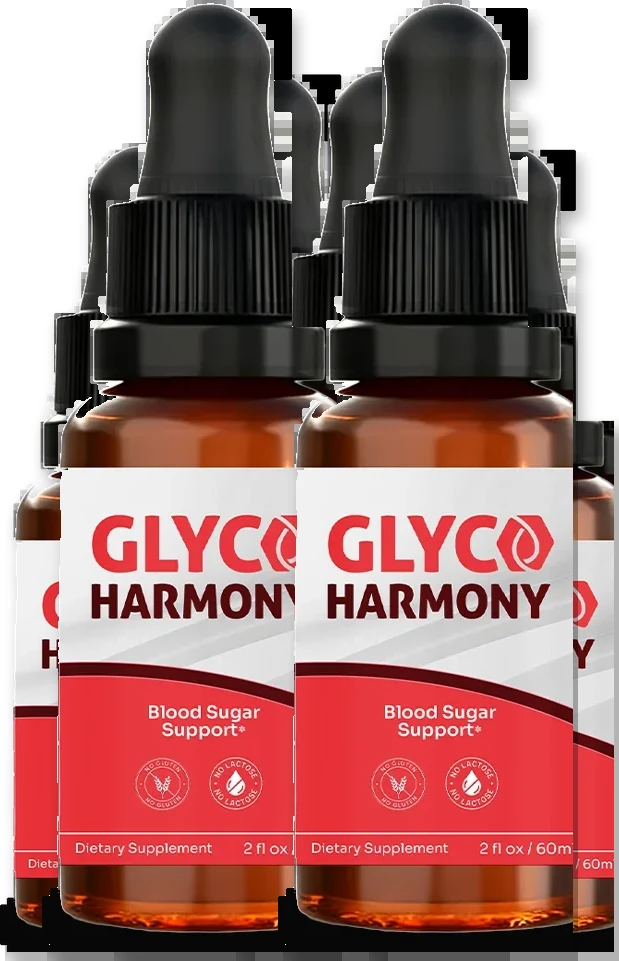
We do the arithmetic for you.
Every ingredient on this label is printed beside the dose its own research used, including where ours falls short. Judge the product on that and use the guarantee if it does nothing.
$294 — six bottles at $49 each
Order On The Official WebsiteFree US shipping · six digital bonuses · 60-day money-back guarantee
What else is inside the 7.6 mg
Gymnema is one name among twelve. Since the blend total is the ceiling for all of them, it is worth seeing the whole list — the order is descending by weight, so position is the only quantitative information the label gives.
- Maca root extract
- Grape seed extract
- Guarana seed extract
- African mango seed extract
- Eleuthero root extract
- Astragalus root extract
- Green tea leaf extract
- Gymnema leaf extract
- Coleus forskohlii root extract
- Capsicum fruit extract
- Grapefruit and raspberry ketones
- The free amino acids
Read that order carefully. Gymnema — the ingredient most associated with blood sugar in the public mind, and the one with the meta-analysis — sits eighth of twelve inside a 7.6 mg total. Whatever amount that is, it is a small share of a small number.
We are printing the list rather than the headline because the headline is what sells and the list is what informs. Every entry, with its own citations and its own trial doses, is on the ingredients page.
The one number outside the blend
Chromium at 200 mcg is declared separately, which means it has a real, checkable amount. That is the part of this label you can hold against the research, and it is covered in full in our post on chromium.
Safety and who should not take it
- If you take insulin or a glucose-lowering medication, gymnema's mechanism is exactly the reason to ask your clinician first. Additive effects on blood sugar are not a hypothetical.
- If you have surgery scheduled, tell the team what you are taking.
- If you are pregnant or nursing, this product is not for you.
- If you monitor your glucose, keep monitoring. Do not use a supplement as a reason to test less often.
NCCIH's guidance on dietary and herbal supplements is the neutral reference for weighing a botanical claim of this kind.
Who should leave this ingredient alone
An ingredient with a plausible glycemic mechanism is an ingredient some people should not take casually. The list is short and specific.
- Anyone on insulin or a glucose-lowering medication. Additive effects are the whole concern. This is a conversation with your prescriber before the first dose, not after the first odd reading.
- Anyone with surgery booked. Tell the team what you take; the standard advice is to stop supplements a couple of weeks beforehand unless told otherwise.
- Anyone pregnant or nursing. This product is for adults and is not intended for you.
- Anyone under 18. Same answer.
- Anyone who has had hypoglycaemia. If your blood sugar has dropped too low before, adding anything that may nudge it downward deserves medical input first.
None of this is a warning that gymnema is dangerous. It is a warning that a plausible mechanism cuts both ways, and that the people most interested in a blood sugar supplement are often the people already being treated for blood sugar — the exact group for whom an unsupervised addition is least sensible. The who it’s for page carries the full list.
How to judge any gymnema product
- Find the amount. If it is inside a blend, find the blend total — that is the ceiling for every ingredient in it.
- Look for standardization. “Standardized to X% gymnemic acids” tells you about strength; a bare plant name does not.
- Compare to the trials. Hundreds of milligrams, daily, for weeks. Anything far below that is a traditional inclusion rather than a studied dose.
- Distrust the name. “Sugar destroyer” describes a taste effect, not a glycemic one.
Our own version of these checks, applied to any label in this category, is on the choosing a blood sugar supplement page.
One more habit worth forming, and it takes ten seconds: before you accept any claim about gymnema, ask which of the three things it is about. Is it the taste effect on the tongue, which is immediate and real and has nothing to do with glucose? Is it the glycemic finding from trials in people with type 2 diabetes at several hundred milligrams? Or is it a claim about this bottle, at whatever share of 7.6 mg the eighth ingredient of twelve represents? Those are three different statements, and almost every misleading advertisement in this category works by letting the first two vouch for the third.
The taste test you can run yourself
Gymnema is the rare supplement ingredient with an effect you can verify in your own kitchen, and it is worth doing because of what it teaches about the rest of the category.
Chew a gymnema leaf or hold gymnema tea in your mouth for a minute, then eat something sweet. For a while afterwards the sweetness is muted or absent; bitter, salt and sour are unaffected. The gymnemic acids are occupying the sweet receptors on your tongue.
Two conclusions follow, and the second is the useful one:
- The effect is real and immediate, which is unusual in this category and is where the “sugar destroyer” name genuinely comes from.
- It has nothing to do with blood glucose, and it only happens when the plant material touches your tongue. A swallowed capsule or a swallowed drop bypasses the receptors entirely.
So an advertisement that opens with the taste story and closes with a blood sugar claim has quietly changed the subject between the two. Noticing that move is worth more than any single fact on this page, because the same move is made with a dozen other ingredients.
Where the real question sits
Not “does gymnema do anything” — the meta-analysis suggests it can, in people with type 2 diabetes, at doses far above this blend. The real question is whether the amount in front of you is anywhere near that, and on a 7.6 mg total shared twelve ways, the arithmetic answers itself.
References
- Devangan S, et al. The effect of Gymnema sylvestre supplementation on glycemic control in type 2 diabetes patients: a systematic review and meta-analysis. Phytotherapy Research. 2021. https://pubmed.ncbi.nlm.nih.gov/34467577/
- Khan F, et al. Comprehensive review on phytochemicals, pharmacological and clinical potentials of Gymnema sylvestre. Frontiers in Pharmacology. 2019. https://www.ncbi.nlm.nih.gov/pmc/articles/PMC6830388/
- U.S. Government Publishing Office, eCFR. 21 CFR 101.36 — Nutrition labeling of dietary supplements. https://www.ecfr.gov/current/title-21/chapter-I/subchapter-B/part-101/subpart-C/section-101.36
- National Center for Complementary and Integrative Health. Dietary and herbal supplements. https://www.nccih.nih.gov/health/dietary-and-herbal-supplements

Every page, every journal post, the bottle facts and the ingredients go through review by Dr. Shira Eytan, MD, FACE before they ship. We write these pages from the Glyco Harmony label and the manufacturer’s own lot paperwork, cite public nutrient references for every named ingredient, and print “not published” wherever a figure is not disclosed rather than estimating it — which, on a 7.6 mg proprietary blend, is most of the panel. Corrections are made on the page itself and the review date moves forward — write to [email protected]. Last reviewed September 2026 by Dr. Shira Eytan, MD, FACE.
A famous name, an honest number.
We would rather print the gap between the trials and the label than let an ingredient list do the persuading.
$294 — six bottles at $49 each
Order Glyco Harmony On The Official WebsiteFree US shipping · six digital bonuses · 60-day money-back guarantee · lot GH.26.Q3.NY.3304