Glyco Harmony Official Website › Blog › Glyco Harmony glycogen support
Glyco Harmony Glycogen Support: What Does That Phrase Mean?
Type the brand name into a search box and "glycogen support" often follows it. The phrase sounds technical, so it feels official. This page asks a plain question: does the Glyco Harmony glycogen support wording match anything on the label or in the seller's own papers? We look at what glycogen is, what the product is sold for, and why precise words matter when you buy a supplement.
Quick answer: Glyco Harmony glycogen support is a search phrase, not a label claim. The seller's papers describe a liquid blood-sugar-support supplement with chromium at 200 mcg and a 7.6 mg blend. They publish no glycogen claim and no study on glycogen. Treat the phrase as a keyword people type, and rely on the label.
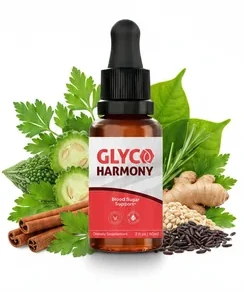
- The seller describes Glyco Harmony as a liquid blood-sugar-support dietary supplement.
- No claim about glycogen is published in the seller's factsheet or on this website.
- Glycogen is the body's stored form of glucose, held mainly in the liver and muscles.
- Chromium at 200 mcg is the only published amount, and no single amount inside the 7.6 mg blend is given.
- No trial of the finished product is published, on glycogen or on anything else.
- It does not treat diabetes, prediabetes or any other condition.
General information, not medical advice. Glyco Harmony is a dietary supplement. It is not FDA approved, and no supplement is. It is not meant to diagnose, treat, cure or prevent any disease. If you have a medical condition or take medicine, ask your doctor or pharmacist before you use it.
What does Glyco Harmony glycogen support suggest?
The phrase mixes two ideas. "Glyco" in the brand name is a prefix that hints at sugar. "Glycogen" is a body term. Put them next to "support" and a reader may hear a promise: that the drops act on stored sugar in the body. That is a reasonable thing to wonder, and it is worth slowing down.
The seller's own wording is different. It calls Glyco Harmony a liquid blood-sugar-support dietary supplement. That is already a careful phrase, and the seller adds that it is not a treatment for diabetes or any condition. Nothing in the factsheet uses glycogen as a claim. If you want the seller's version in one place, the home page has it.
So the first answer to your search is simple. Glyco harmony glycogen support is a phrase, not a promise. The Glyco Harmony glycogen support wording is not on the label. It is something people type, and some third-party pages repeat.
What is glycogen, in plain words?
Glycogen is how the body stores glucose for later. Most of it is held in the liver and the muscles. When the body needs energy between meals or during activity, it can release glucose from these stores. Food, movement, sleep and hormones such as insulin all take part in that balance.
This is general background, not a claim about the product. We include it because the word is easy to misuse. A page that says a supplement "supports glycogen" should be able to say how, at what dose and with what evidence. If it cannot, the phrase is decoration.
What does the label say instead of Glyco Harmony glycogen support?
Here is the label, line by line, set against the phrase.
| Question | What the seller publishes | Glycogen link |
|---|---|---|
| What is it? | A liquid dietary supplement, drops, 2 fl oz (60 ml) | None stated |
| Named amount | Chromium (as chromium picolinate) 200 mcg | None stated |
| The blend | 7.6 mg total, 18 ingredients, amounts not published | None stated |
| What it is sold for | Blood sugar support, as a food supplement | General, not glycogen |
| What it is not | Not a treatment, not a replacement for medicine | Not applicable |
| Evidence on the product | No trial of the finished product | None |
Every cell in the last column says the same thing about glyco harmony glycogen support: the seller makes no glycogen claim. That does not make the phrase wrong to search. It means the answer to "does it support glycogen" is "not published".
Could the ingredients explain a glycogen link?
Some readers guess that the ingredients might link to glycogen. We cannot confirm that, and the seller does not say so. What we can say is what the factsheet says about the ingredients that touch blood glucose in general: gymnema and chromium can affect blood glucose. That is a caution, and it is why people on blood sugar medicine should ask a pharmacist first.
The blend lists maca, grape seed, guarana, African mango, eleuthero, astragalus, green tea, gymnema, Coleus forskohlii, capsicum, grapefruit, raspberry ketones and several amino acids, in descending order by weight. How much of each is inside is not published. A claim about one particular body store would need a dose, and none is available. Our piece on the 7.6 mg blend explains why that is the number to ask about.
Why do similar names confuse the Glyco Harmony glycogen support search?
Brand names that start with "gluco" or "glyco" are common in this category. People mistype them, autocomplete mixes them, and pages written for one name get shown for another. A phrase like glycogen support may belong to a different product's marketing and drift onto this one's searches.
Two habits help. First, read the name on the bottle letter by letter and compare it with the name on the page. Second, check the supplement facts panel, because the panel is what the product is. The recorded lot for the bottle sold here is GH.26.Q3.NY.3304. If the page you are reading cannot show a panel and a lot, it is not a good guide to your bottle.
How should you judge any glycogen claim on a supplement?
Use these four questions. They work for any product.
- Does the label say it? If the phrase is not on the label or the seller's papers, it is someone else's wording.
- What dose? A claim about the body needs an amount. A 7.6 mg blend with no individual amounts gives none.
- What evidence? Look for a study on this product. None is published here.
- Who gains? A page that earns money from a sale has a reason to use big words. This website is a seller too, and it says so.
If a claim fails the first two questions, leave it out of your decision.
What if you want to support your blood sugar, not just a phrase?
Start with what the evidence ranks highest. Food choices, movement, sleep and regular check-ups with your clinician come before any supplement. Our blood sugar guide sets this out and says where a supplement sits.
If you still want to try the drops, buy for the reasons the seller can back: a liquid format, 200 mcg of chromium, a stated guarantee and an easy morning habit. Keep your doctor in the loop if you take medicine. Then judge the result by how you and your clinician see things, not by a keyword.
What do reviewers say that touches on glycogen?
The eight named reviews on this website use everyday words. One says she felt more even after meals in week 3. Another says an afternoon slump is lighter. Another reports better energy after lunch. A fourth says focus is a small plus.
None of them uses the word glycogen, and none reports a lab value or a meter reading. These are personal impressions, shaped by other habits such as walking and food choices, and the seller notes that results vary by person. They are fair to read, but they cannot tell you what is happening to any store in the body.
Why does precise wording matter on a supplement page?
Supplement sellers are allowed to describe how an ingredient affects the structure or function of the body, within rules, but they may not claim to treat a disease. Words like glycogen sit near that line. They sound clinical and can make a general product look specific.
When you read a page, ask what sits behind each technical word. Is there a number? A study? A label line? If the honest answer is "no, it just sounds right", the word is doing marketing work. We hold ourselves to the same test here, which is why this page says "not published" so often.
Frequently asked questions
Does Glyco Harmony support glycogen?
The seller makes no glycogen claim. It describes a liquid blood-sugar-support supplement and says it is not a treatment for any condition.
What is glycogen?
It is the body's stored form of glucose, held mainly in the liver and muscles. This is general background and not a claim about the product.
Why does my search show "glycogen support" next to the brand?
It is a phrase people type and some third-party pages repeat. It is not wording from the label or the seller's factsheet.
Is there a study on Glyco Harmony and glycogen?
No. No trial of the finished product is published, on glycogen or on anything else.
What is the only named amount on the label?
Chromium, as chromium picolinate, at 200 mcg. The 7.6 mg blend is declared by total weight and individual amounts are not published.
Should I ask my doctor before using it?
Yes if you take medicine for blood sugar, blood pressure, thyroid or heart conditions, or a blood thinner, or if you are pregnant or nursing.
Our view
We like words that match labels. Glycogen is a real part of how the body handles sugar, but it is not a word the seller uses for this product, and we will not use it as a claim either.
If you came here from a search, the practical result is this: read the panel, note the one named amount, and treat the rest as not published. Then decide on the facts that exist.
A food supplement can be a small part of a routine. It is not a way to manage a condition. If you have questions about your own blood sugar, take them to a clinician.
Last updated