Glyco Harmony Official Website › Blog › The Caffeine Question
There Is Caffeine in This Supplement. Here Is How Much, and Why.
Guarana seed and green tea leaf both carry caffeine naturally, and both are inside the 7.6 mg blend. The amount is a trace — but “trace” is a word, not a number, and you are entitled to know which ingredients it comes from before you buy.
- Two blend ingredients carry caffeine: guarana seed extract and green tea leaf extract.
- The whole blend is 7.6 mg, so the caffeine inside it is a small fraction of a small number — far below a cup of tea.
- The exact figure is not published, because individual blend amounts are not. That is the honest limit of what anyone can tell you.
- It matters to some people anyway — pregnancy, sensitivity, a cardiologist’s advice — and those people deserve the sentence rather than the silence.
This is general information, not medical advice. Glyco Harmony is a dietary supplement. It is not a treatment for diabetes or prediabetes, it is not a substitute for prescribed medication, and nothing on this page should be used to change a prescription. If you are managing blood sugar, the person to talk to is the clinician who has your results.
Where the caffeine comes from
Neither ingredient is on the panel for its caffeine. Both are there for other reasons, and the caffeine comes along with the plant.
Guarana seed extract
A South American seed traditionally used as a stimulant, and one of the more caffeine-dense plants there is — by weight, guarana seed typically carries more caffeine than coffee bean. On this label it sits third in the blend, which is relatively high in the order.
Green tea leaf extract
Studied far more than guarana, and for reasons unrelated to caffeine. A meta-analysis of green tea and glycemic markers and a systematic review both examine its effects on measures relevant to this product’s category. NCCIH's green tea page carries the consumer summary and the cautions, including the interaction notes worth knowing.
Unless an extract is explicitly decaffeinated, green tea extract contains caffeine. This one is not described as decaffeinated, so it does.
How much, realistically
Here is what can be said with confidence and what cannot.
| Source | Typical caffeine |
|---|---|
| Brewed coffee, 8 oz | 80–100 mg |
| Black tea, 8 oz | 40–50 mg |
| Green tea, 8 oz | 25–30 mg |
| Cola, 12 oz | 30–40 mg |
| Dark chocolate, 1 oz | 20–25 mg |
| Glyco Harmony, one serving | Not published — a fraction of a 7.6 mg blend |
The arithmetic sets a hard ceiling even without a published figure. The entire blend weighs 7.6 mg. Even in the impossible case that every milligram of it were pure caffeine, one serving would still be under a tenth of a cup of coffee. The real number is a small share of that, because caffeine is a small share of each extract and those extracts are two of twelve.
So: present, declared, and very small. That is the truthful description, and it is more than most labels in this category offer.
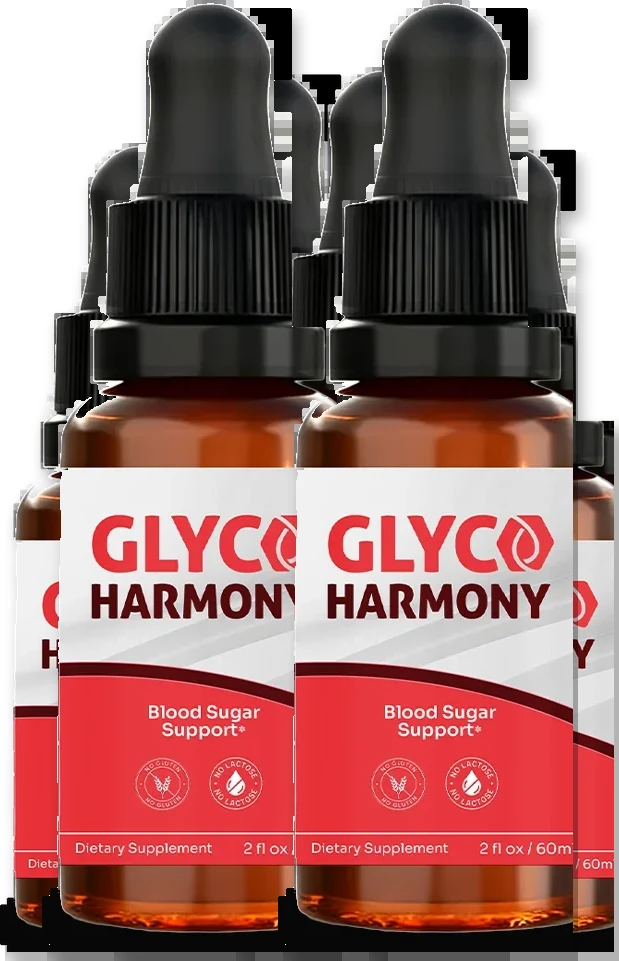
Declared, not hidden.
Every ingredient on this panel is printed, including the ones that raise a question. Six bottles is our lowest price per bottle, with sixty days to change your mind.
$294 — six bottles at $49 each
Order On The Official WebsiteFree US shipping · six digital bonuses · 60-day money-back guarantee
Does caffeine affect blood sugar?
On a blood-sugar product this is the question behind the question, and it deserves a straight answer rather than reassurance.
Caffeine in ordinary dietary amounts — cups of coffee, not milligrams from a blend — has been studied for effects on insulin sensitivity, and the findings are genuinely mixed. Some acute studies report reduced insulin sensitivity after a caffeine dose; longer observational work on coffee drinking tends to point the other way, and coffee contains a great deal besides caffeine. It is an unresolved literature, and anybody presenting it as settled in either direction is overselling it.
What that means here is narrower and more useful. The quantities under discussion in that research are two or three orders of magnitude above what a fraction of a 7.6 mg blend can deliver. Whatever caffeine does or does not do to insulin sensitivity at 200 mg, it is not doing it at a fraction of a milligram.
The part that is worth acting on
Your coffee is the caffeine question that matters, not your supplement. If you drink three or four cups a day and you are monitoring glucose, that is a variable worth mentioning to your clinician — not because coffee is bad for you, but because a consistent habit is easier to interpret than a variable one.
Why we are not making a claim either way
Because the evidence does not support one, and because a supplement may not be presented as affecting a disease process regardless. Our longer piece on where this product honestly sits is what actually moves blood sugar, and the short version is that the answer is not in this bottle or any other.
Who should care about a trace
“It is tiny” is a fair answer for most people and a poor answer for some. These are the cases where the sentence matters:
- Pregnancy and nursing. Caffeine intake is usually limited during pregnancy, and this product is not intended for you regardless — it is for adults and not recommended in pregnancy.
- Genuine caffeine sensitivity. Some people react to amounts most would not notice. If you are one of them, you know it already, and a morning serving is the sensible timing.
- Arrhythmia or a cardiologist’s advice to avoid stimulants. A trace is unlikely to matter, and it is still their call rather than ours.
- Anxiety disorders where caffeine is a known trigger.
- Strict avoidance for any reason at all — religious, medical, personal. You are entitled to know it is there, which is the whole point of this page.
- Stacking. If you take several supplements, the traces add up in a way no single label shows you.
The other stimulant-adjacent ingredient
Capsicum fruit extract also sits in the blend. It is not a stimulant in the caffeine sense, but it is pharmacologically active — a meta-analysis of capsaicinoids covers the metabolic literature, most of it at doses well above anything a 7.6 mg blend can hold.
Worth naming for the same reason as the caffeine: people who react to chilli sometimes react to capsicum extracts, and nobody enjoys discovering that from a bottle rather than from a page.
Spotting hidden caffeine on any label
The useful thing to take from this page is not the figure for our product — it is the habit. Caffeine appears on supplement panels under a dozen names, and most of them do not contain the word.
| What you see | What it means | Rough strength |
|---|---|---|
| Caffeine anhydrous | Added, isolated caffeine | Whatever the label says |
| Guarana seed extract | Naturally caffeine-dense | High by weight |
| Green tea leaf extract | Contains caffeine unless decaffeinated | Moderate |
| Green coffee bean extract | Contains caffeine | Moderate |
| Yerba mate, kola nut | Both caffeine sources | Moderate |
| Theobromine | A cocoa relative of caffeine | Milder, still stimulant |
| “Energy blend” | Almost always one of the above | Unknowable from the name |
Two rules make this quick. First, read the blend contents rather than the blend name — the name is marketing and the contents are regulated. Second, treat any product that makes you feel something within an hour as containing a stimulant until proven otherwise, because almost nothing else in this category acts that fast.
The adding-up problem
Individually these traces are trivial. The reason to notice them is that people who buy one supplement usually buy several, and nobody is totalling the column for you. A blood-sugar formula, a pre-workout, a fat-burner and a multivitamin can between them deliver a genuine dose while every individual label truthfully says “trace”. Keeping a list of what you take is the entire fix, and it takes a minute.
Why the figure is not on the label
Because the blend is proprietary, and United States rules permit a blend to declare a combined total without individual amounts. That is legal and it is normal. It is also the reason nobody — including us — can give you a milligram figure for the caffeine in a serving.
The FDA's questions and answers on dietary supplements explains what the category is obliged to disclose, and the ODS consumer guide is the neutral primer on reading a label sceptically. Our own longer piece on this specific trade-off is the gymnema post, which works the same arithmetic on a different ingredient.
What we can tell you
- Which ingredients the caffeine comes from — named above.
- The ceiling, from the blend total — under a tenth of a coffee, and in reality far less.
- That it is declared rather than hidden, on the panel printed in full on the ingredients page.
- That if this matters to you, the 60-day guarantee means finding out costs you nothing.
References
- Zheng XX, et al. Effects of green tea catechins with or without caffeine on glycemic control in adults: a meta-analysis of randomized controlled trials. American Journal of Clinical Nutrition. 2013. https://pubmed.ncbi.nlm.nih.gov/23426037/
- Yu J, et al. Effects of green tea consumption on glycemic control: a systematic review and meta-analysis of randomized controlled trials. Nutrition & Metabolism. 2020. https://www.ncbi.nlm.nih.gov/pmc/articles/PMC7350188/
- National Center for Complementary and Integrative Health. Green tea. https://www.nccih.nih.gov/health/green-tea
- Whiting S, Derbyshire E, Tiwari BK. The effects of capsaicin and capsiate on energy balance: critical review and meta-analyses of studies in humans. Appetite. 2012. https://www.ncbi.nlm.nih.gov/pmc/articles/PMC3257466/
- U.S. Food and Drug Administration. Questions and answers on dietary supplements. https://www.fda.gov/food/information-consumers-using-dietary-supplements/questions-and-answers-dietary-supplements
- National Institutes of Health, Office of Dietary Supplements. Dietary supplements: what you need to know. https://ods.od.nih.gov/factsheets/WYNTK-Consumer/

Every page, every journal post, the bottle facts and the ingredients go through review by Dr. Shira Eytan, MD, FACE before they ship. We write these pages from the Glyco Harmony label and the manufacturer’s own lot paperwork, cite public nutrient references for every named ingredient, and print “not published” wherever a figure is not disclosed rather than estimating it — which, on a 7.6 mg proprietary blend, is most of the panel. Corrections are made on the page itself and the review date moves forward — write to [email protected]. Last reviewed September 2026 by Dr. Shira Eytan, MD, FACE.
Small, but you should still be told.
A trace of caffeine changes nothing for most people and matters a great deal to a few. Printing it is the only way you get to decide which you are.
$294 — six bottles at $49 each
Order Glyco Harmony On The Official WebsiteFree US shipping · six digital bonuses · 60-day money-back guarantee · lot GH.26.Q3.NY.3304