Glyco Harmony Official Website › Blog › Glyco Harmony medicine question
Glyco Harmony Medicine: Is It a Drug, a Supplement or Something Else?
The Glyco Harmony medicine question comes up in two forms. Some people ask whether the drops are a medicine at all. Others ask what to do with their own medicines if they start the drops. This page answers both, in plain words: what the product is, what the law lets a supplement say, and a simple way to talk to your doctor or pharmacist.
Quick answer: The Glyco Harmony medicine question has a short answer. It is a liquid dietary supplement, not a medicine. The seller says it does not treat any condition and does not replace any medication. If you take medicine, keep taking it and show the label to your doctor or pharmacist before you start.
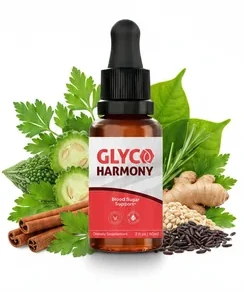
- Glyco Harmony is a food supplement taken as drops. It is not a medicine.
- No condition is treated by it, diabetes and prediabetes included.
- It does not replace or reduce the need for any medication.
- It is not FDA approved, and no supplement is. The facility is FDA-registered, which means registered only.
- Check with a doctor or pharmacist before starting if you use medicine for blood sugar, blood pressure, thyroid or heart conditions, or a blood thinner.
- The FDA statement on the label: not evaluated, not intended to diagnose, treat, cure or prevent any disease.
General information, not medical advice. Glyco Harmony is a dietary supplement. It is not FDA approved, and no supplement is. It is not meant to diagnose, treat, cure or prevent any disease. If you have a medical condition or take medicine, ask your doctor or pharmacist before you use it.
Is Glyco Harmony medicine or a supplement?
It is a supplement. The seller describes Glyco Harmony as a liquid dietary supplement taken as drops. It is a food supplement, not a medicine. That is how it is sold, how it is labelled and how this website treats it.
The difference is not just a word. Medicines are tested and approved for a named use, and they carry strict rules. Dietary supplements are not approved by the FDA. The label on a supplement carries a standard statement that its claims have not been evaluated and that it is not meant to diagnose, treat, cure or prevent any disease. You can read the wording on the seller's disclaimer page.
So when someone searches for "glyco harmony medicine", the accurate answer is: it is not one. Any glyco harmony medicine claim you read should be checked against that line. It may contain plant extracts and amino acids that are sold in many supplements, but it is not a drug, and it should not be treated like one.
What does "not a medicine" mean for the Glyco Harmony medicine question?
Three things follow from that.
- No approved use. No agency has approved Glyco Harmony for any condition. The seller's facility is FDA-registered, but that only means it is registered. It does not mean the product is approved.
- No promise of a result. The seller does not claim that it lowers blood sugar, reverses insulin resistance, manages type 2 diabetes or guarantees stable readings. It says those claims, where they appear on third-party pages, are disease claims and are unsupported by any trial of this product.
- No replacement role. It does not replace medicine and does not reduce the need for it. Do not stop or lower a prescription because you started a supplement.
These points protect you. They also explain why the product is sold with a guarantee instead of a medical promise.
Can you take Glyco Harmony next to your own medicines?
Many people take supplements next to prescriptions. The question is whether the two meet in your body in a way that matters. The seller's factsheet names the main meeting points.
| Medicine group | Ingredient to ask about | What the seller says |
|---|---|---|
| Blood sugar medicine | Gymnema, chromium | Both can affect blood glucose |
| Blood pressure medicine | Coleus forskohlii, green tea | Both can affect blood pressure |
| Blood thinners | Grape seed, green tea | Can add to anticoagulants |
| Immune-suppressing medicine | Astragalus | May interact with immunosuppressants |
| Thyroid or heart medicine | Not itemised | Speak to a professional first |
A table like this cannot tell you what is safe for you. It tells you what to ask. Our interaction map lists each ingredient in more detail.
How do you talk to a doctor about the Glyco Harmony medicine question?
Keep it short and bring the label. A pharmacist can often answer in a few minutes. Here is a simple script.
- "I am thinking about a liquid supplement called Glyco Harmony. Here is the panel."
- "I take these medicines." Give the names and doses from your own list.
- "Does anything on the panel clash with them?"
- "Should I change when I take my medicines, or tell you when I start?"
- "Is there anything you would want me to watch for?"
Write the answers down. If you have been told to avoid grapefruit, mention it, because grapefruit is on the ingredient list. If you are pregnant or nursing, the seller says not to use it.
Do not let a video or a web page, including this one, answer your glyco harmony medicine questions for you. The guide to evidence on this site explains why food, movement and your clinician's plan rank above any supplement.
What can the drops do, and what can they not do?
What the seller publishes is modest. The product is a liquid with chromium at 200 mcg and a 7.6 mg blend of 18 ingredients. The reviews describe a routine that stuck, a lemon taste and, at best, a mild change after 3 to 4 weeks. The amounts of the individual blend ingredients are not published.
What it cannot do is stand in for care. If you have a diagnosed condition, the plan you share with your clinician comes first. If you do not, but you are worried about your blood sugar, the answer is a visit and a test, not a bottle. A supplement can sit beside a plan. It cannot be the plan.
Does a medicine-style claim on a website mean it is true?
No. Look at wording. Phrases like "clinically proven", "doctor approved" or "replaces your pills" are medicine language. A supplement page has no right to use them as facts. The seller's own pages avoid them, and it asks you to read the label on your bottle over any page. If you see medicine language near this product, treat it as a warning about the page, not a feature of the product.
What should you bring to an appointment about your medicines?
Come prepared and the visit takes minutes. Bring the bottle or a clear photo of the supplement facts panel. Bring your current medicine list with doses. Bring the ingredient list: maca, grape seed, guarana, African mango, eleuthero, astragalus, green tea, gymnema, Coleus forskohlii, capsicum, grapefruit, raspberry ketones, L-glutamine, L-tyrosine, L-arginine, beta-alanine, GABA and tryptophan.
Also bring two honest facts: the blend is 7.6 mg in total with no individual amounts published, and the only named amount is chromium at 200 mcg. A clinician can work with those facts. If they ask for more detail than the label gives, the order desk at +1 (925) 231-0148 can tell you what the seller does and does not publish.
Why do people mix up supplements and medicines?
Several habits blur the line. Both come in bottles, both have dosing directions and both are sold with talk of health. A supplement page may also borrow medical-sounding words, such as "formula", "dose" and "therapy", which makes it feel like a drug.
The clearest tell is the label statement. A medicine states what it treats and has been approved for that use. A supplement carries the line that the claims have not been evaluated. Check for that line on your bottle, and if you cannot find it, ask the seller before you use the product.
Frequently asked questions
Is Glyco Harmony a medicine?
No. It is a liquid dietary supplement and does not treat any condition, diabetes included.
Can Glyco Harmony replace my medicine?
No. The seller says it does not replace or reduce the need for any medication. Keep taking what your doctor prescribed.
Is Glyco Harmony FDA approved?
No. A supplement cannot hold FDA approval, so none does. The facility is FDA-registered, which means the facility is registered and nothing more.
Can I take Glyco Harmony with my prescriptions?
Ask your doctor or pharmacist first, especially for blood sugar, blood pressure, thyroid or heart medicine, or a blood thinner.
Do I need a prescription to buy it?
A prescription is not mentioned in the seller's terms. It is sold on the official website to adults aged 18 and over.
Who should not take it?
Anyone under 18, anyone pregnant or nursing, and anyone told to avoid grapefruit. Talk to a doctor before use.
Our view
This is the shortest question on the site with the most important answer: it is not a medicine. The seller says so, the label says so and so do we.
That clarity is useful. It tells you where the product sits in your day. It can be an extra habit, taken at a stated time, beside the plan your clinician set. It cannot be the plan.
If you take medicine, make the call or the visit before the first serving. If you are unsure, ask. We would rather you ask once too often than once too late.
Last updated